

How to Tithe
A fourth lesson


In What Good is Faith?, I discussed three things that faith communities do that secular people should try: rituals especially sabbath, scripture, and a sense of awe. A fourth: tithing. It is common among faith communities and should be considered by the secular and faithful alike.
Tithing is reassuring. There is a man out there, perhaps someone you already know, who made 90% as much money as you did this past year yet is living a better, more fulfilling life. He’s slightly more frugal. He’s just a bit more grateful. He goes hard on the many free or virtually free joys that life offers. He’s slightly poorer yet slightly better than I am in the ways that matter most. Setting aside 10% is a reminder that I can survive on the other 90% and improve with tweaks here and there. I could have even cut deeper without huge sacrifice. Proving that to myself is a comforting reminder.
Tithing is liberating. Give to the causes you care about the most. Pay whatever taxes are owed and not a penny more. Insure against calamity. Provide for your family. Then what? Then do whatever you want with the clearest of consciences. Offend Greta Thunberg with your carbon footprint. Get banned from the casino. Fly the people you actually like half way around the world for an exciting adventure. How will you sleep at night? Ideally under high thread count sheets next to someone hot who loves you and will cook breakfast in the morning.
Tithing is efficient. You have more to give in up years and it costs you less net after tax benefits of giving. You have less to give in down years but can keep more of the less diminished utility of those marginal dollars. Giving well, you can cost yourself less for the same benefit to others or benefit others for the same cost to yourself (or some combination of both). This also dampens the volatility of the fluctuations of your after tax wealth.
Whether or not religious teaching compels you, consider this reassuring, liberating, and tax efficient practice. Convinced? Here’s the specific mechanics of implementing it. What to give? Where to store it? What deserves support?
What to give? In short, give your most appreciated assets with the lowest cost basis in order to kill as much taxable gains as possible. If you own a lot of old bitcoin, that is often a good option. I’ve accumulated it for over a decade and reach for it first for donating.
If you’re starting today, the best asset allocation for tithing is a direct index. Instead of owning a single index fund, it manages the components. This is far more tax efficient because they can automatically harvest tax losses so that you can make money overall while simultaneously lowering your tax bill. The impact after taxes is staggering. Added benefit: you can donate the most appreciated components each year.
A tithe of what? Up to you to pick the right denominator. The vast majority of my own economics are based on investing performance not a relatively modest salary (and one I pay myself as I own the company). Others in similar situations might consider tithing 10% of their net worth change. Just be consistent so that you can put this practice on autopilot each year.
Once you calculated the dollar value of your tithe and identified the most appreciated assets to gift, then contribute it to a donor advised fund (DAF). This gives you the tax benefit up front. It separate the topic of what and how much you give each year from the topic of where the money ultimately goes. My DAF is on the Daffy platform, which I love. I admire the founder, enjoy the platform, and find it easy and intuitive. I just made a donation from my DAF today.
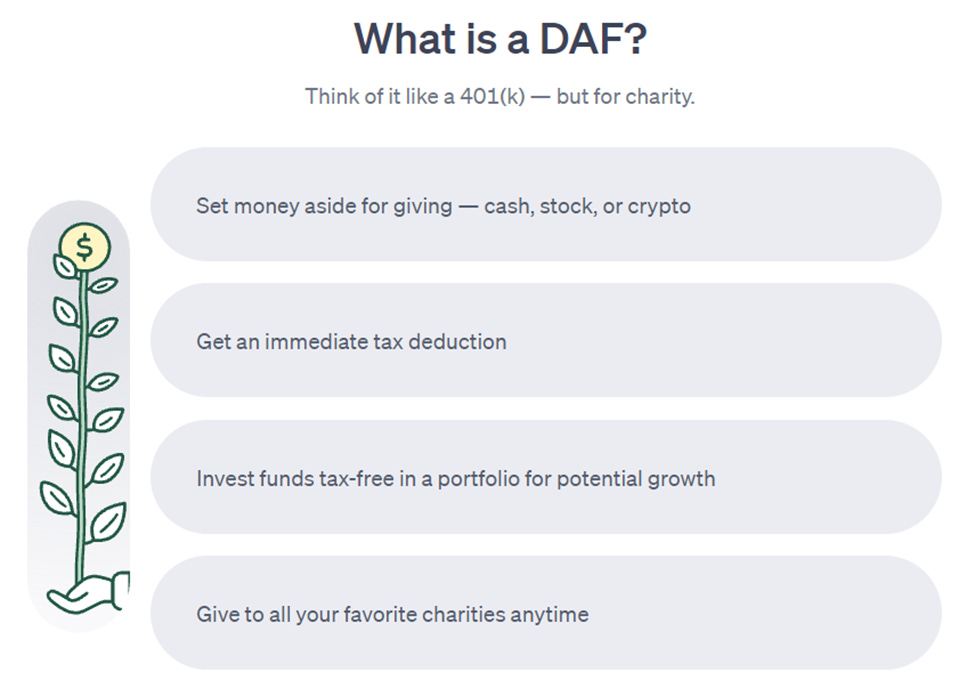
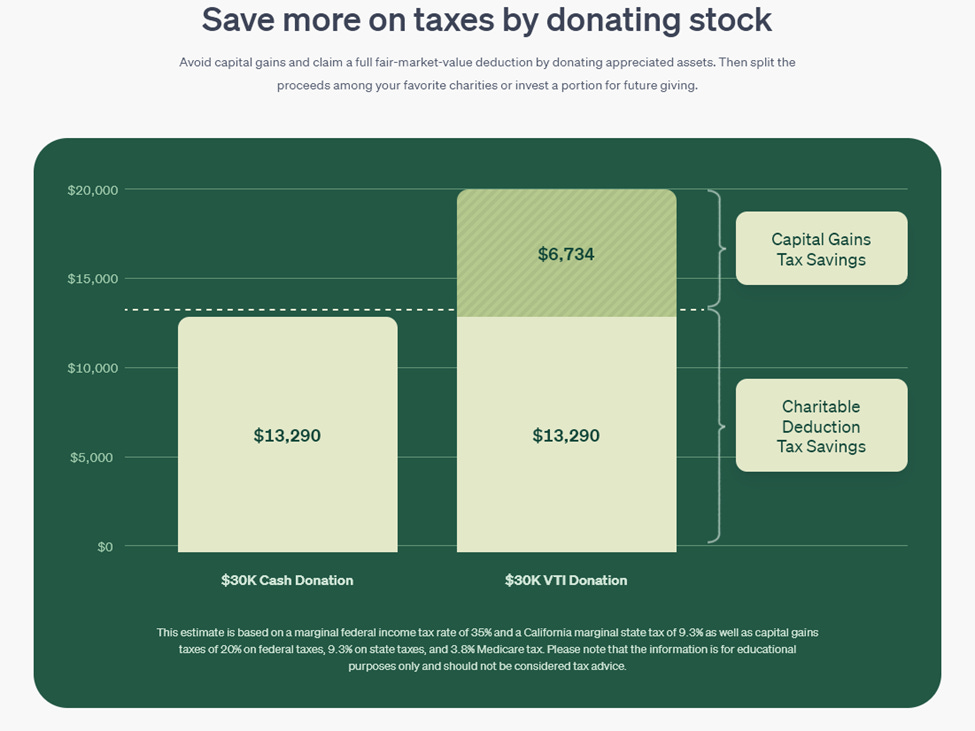
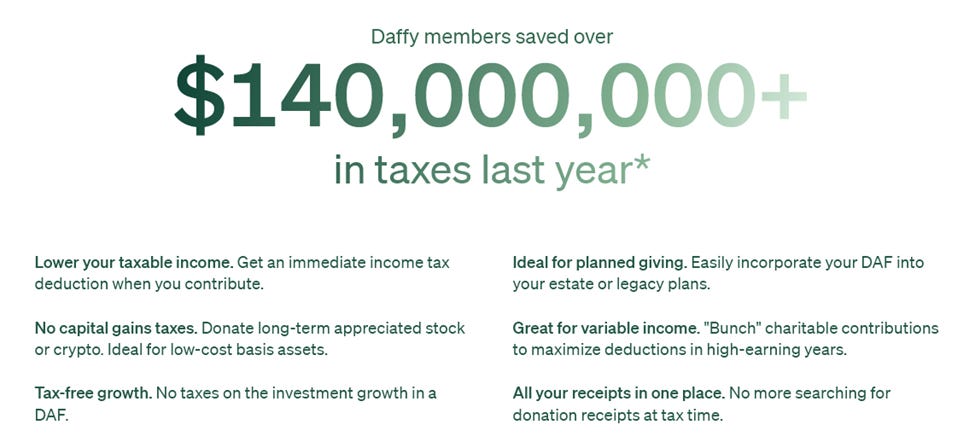
Between the time that I contribute to my DAF and the time that the DAF donates money to causes of my choice, I have it invested in Vanguard Total Stock Market Index Fund ETF Shares (VTI) with a 0.03% total expense ratio which is up over 800% so far.
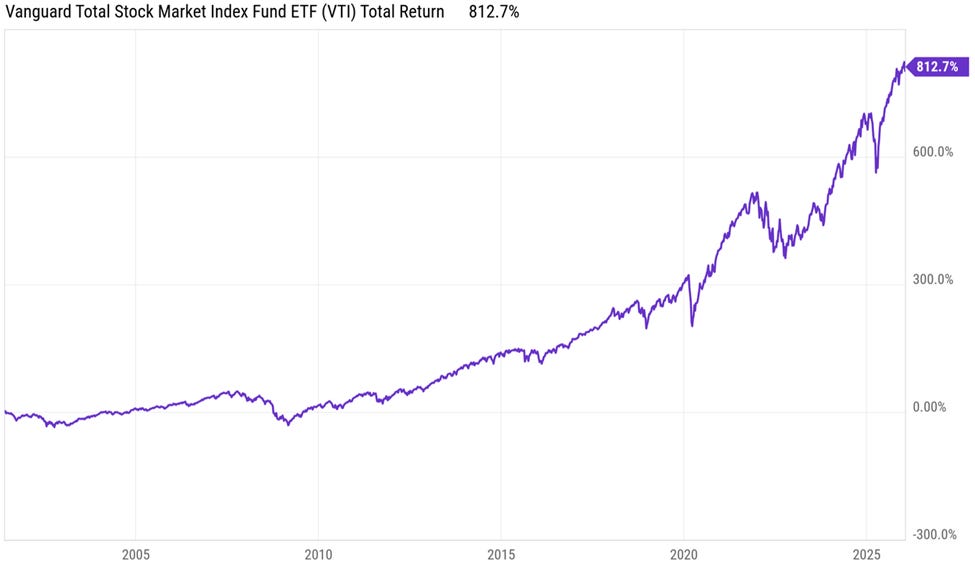
I’m able to benefit causes I care about massively more via a DAF. My money makes a lot more money than I earn. My DAF’s money makes a lot more money than I give.
Then what? Then allocate the DAF’s gains (growing its principal by the amount you contribute) to charities. My favorite is Watsi where I’ve helped fund healthcare for 665 patients in 16 countries and counting. The DAF also allows me to fund the social obligations that come from a wife serving on boards and other local needs.
A caution about the non-profit world: there is greed and dishonesty just like in the for profit world. Always check with a guide such as Charity Navigator to make sure that a charity is legitimate. I also avoid any that spend a lot of money on political advocacy. Many charities are mostly lobbyists and rarely lobby for public policies I advocate. Many capitalists use capitalism to make money that they donate to charities that use most of the money to lobby against capitalism. If that isn’t what you intend to do, make sure you don’t do it.
Religiously oriented financial institutions can be great places to save your money before you donate it. My favorite example is Christian Community Credit Union where I bank. They don’t make a profit but instead run their non-profit for the benefit of its members. They also are incredibly generous with sign up bonuses:
$50 bonus just for registering here
$100 bonus for High-Yield Checking
$100 bonus for High-Yield Savings
$200 bonus for Cash Rewards Visa
They recently grew by merging with AdelFi and could convert to a bank someday. If you join, you’ll get first dibs on cheap stock in such a demutualization. Meanwhile, your money is used to finance church and ministry growth. TL;DR: you get $50-450 in sign up bonuses and give support to worthy causes indirectly without it costing you anything.
Caveat
I’m happy to share what I do, but understand that everyone’s circumstances and priorities are different. Just pick and choose whatever is relevant to you.
Conclusion
Steps to implement today: set up a DAF here with $1k via your credit card (for ~$30 in cash back for me or whatever you get from yours). They give you $25 for signing up.
Allocate it all sensibly (I like 100% in VTI). Then tithe your most appreciated assets to it each year and donate the DAF’s gains to your favorite cause (I like Watsi).
TL;DR
Give. But give with a hard head as well as a soft heart. Give with all of the seriousness that you use to earn, save, and invest.
This is the way
Some great ideas Chris; never thought of using a DAF! Another option is to start your generosity with 10% and increase it as your income increases. 10% may be a stretch for some but nothing for others.