

What Now?
Holding on and letting go

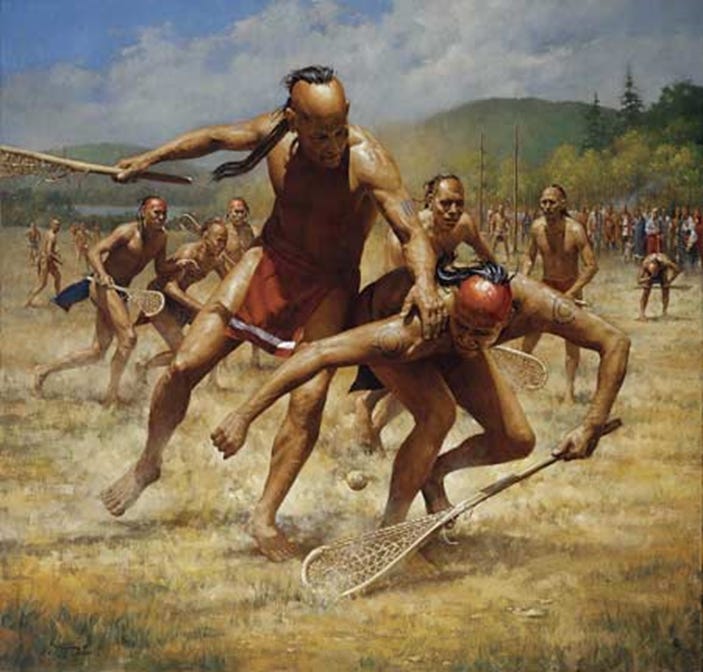
Austin Garrison is a lifelong leader: team captain, professional lacrosse player, BJJ black belt, and senior credit trader. No midlife crisis here as there is no crisis, but perhaps a midlife refresh. I want to explore when it is time to let go and when it is time to hang on during this transition from Wall Street to marriage and fatherhood. Austin, thanks for answering a few questions for Vale Tudo readers.
Your home went from one to two to three. What about being a single guy and then a newlywed are you keeping as your family grows? And what are you dropping?
Big caveat up front, I’m only seven weeks into this fatherhood thing. And despite logging some serious reps with eight nieces and nephews over the years, I’m still very much figuring this out on the fly. Embracing the chaos.
The most obvious thing I’m dropping is living for myself.
Every father knows this, but the speed and depth of that priority shift is still profound when it actually hits you, in ways big and small. That was already evolving with a partner and a marriage, of course, but the growing sense of purpose I have as we’re now a family unit is immense. It’s a different fuel source entirely.
Practically, I’m also having to reevaluate some of my single-guy hobbies. Motorcycle riding, for example, and I know this is something you think about a lot around personal risk, I suppose the calculus just changes when people depend on you in that fundamental way.
As far as what I’m keeping, having gotten married later in life, I’m a pretty independent person, accomplished by certain measures, and I think wary of getting consumed by parenthood. Not in the sense that I’m not all in. I’m obsessed with this kid and committed to being hyper present through every stage. But I’m trying to retain my core while allowing space to grow into fatherhood on my own terms, and quite excited about how my world view will inevitably shift. I’ve just seen guys lose themselves entirely in it. Dad mode becomes their whole identity. I’m just trying to be intentional about what that evolution means for me.
In practice, it looks like me burping her after a 3am feed, folding a pile of pink onesies, and then forty minutes later I’m in an assault bike pain chamber in the garage trying to hold my VO2 max together. Planning a family friendly trip to DC in one browser tab while lining up a brother’s outing to Texas to run a Tactical Games obstacle course in the other. Or even answering these questions while wearing a baby bjorn… I’ve also gotten more diligent about checking in with friends and family too, making sure those relationships don’t quietly atrophy because I’m in new dad mode. And I’ll confess I spent more time than I’d like to admit redesigning my strength and conditioning programming around newborn demands, something that doesn’t break on minimal sleep and limited training windows. That was actually a pretty fun exercise.
After losing your father, you wrote that you ‘came out of it clearer about what I value.’ You were a son. Now you’re a father. What are you burying and what are you reviving from your dad’s fatherhood as you begin yours?
What I’m reviving, a few things come to mind immediately. The way he treated and revered my mother. That lands even harder now that our first is a girl. I want her to see what respect and partnership look like from day one, not as a lesson but the baseline. His work ethic: steadfast, Midwestern, no-complaints perseverance. I saw that most acutely through his cancer, actually. He just kept showing up. And his commitment to family above everything else. That wasn’t aspirational for him, it was just how he operated. He was at every one of our games. A devoted fan. And he had this impressive writing style where he’d send thoughtful emails capturing something we were going through as a family, a season, a moment. He was just always around. Not in a loud way. In a steady, present way that I didn’t fully appreciate until he wasn’t.
What I’m burying is more nuanced. Our relationship was very close and I never doubted how deeply he cared for me. But physical affection was muted. Hugs, warmth, that kind of thing, it just wasn’t the language. Partly generational, maybe the other side of that Midwestern stoicism. I don’t hold that against him at all. Different era, different norms. But it’s something I’m very intentionally leaning into with my daughter, and with any children after her. Regardless of age, regardless of gender. I want affection to be the default.
Does your success in athletics lead you toward encouraging kids to have a wide aperture, many activities and sports, or to narrow the aperture and focus early?
Wide aperture, no question. I’m old enough to remember when a college lacrosse coach would show up at your high school hockey game just to see what kind of competitor and leader you were in a completely different context. That told them more than any sport specific showcase ever could. The amount of specialization in youth athletics now genuinely troubles me as I think about my kids’ experience.
I’ll add a personal footnote here. Despite lacrosse being my path, Hockey was truly my first love and I was a pretty good player growing up. A defensive minded center on a very select team in middle school, quite serviceable at a high level. But I burned out. Quit the sport for a year, which at that age is pretty catastrophic for any trajectory you might have been on. Not that I was getting drafted, but I could play. And the burnout was real. The team was set to travel to Russia. I would have had to miss the early lacrosse season, which by then was where my heart was heading. Everyone was super excited and I was miserable and stressed. That was the moment I knew. When you’re a teenager and the thing you’ve committed years to starts making you dread the thing that’s supposed to be the reward, something’s broken. There’s a cost to pushing too hard too early that doesn’t always show up in the stats.
And it’s not just my experience. The Soviet athletic development system, arguably the most successful talent pipeline in sports history, deliberately delayed specialization and built broad athletic foundations first. If that program thought early specialization was counterproductive, maybe the travel-ball-at-age-eight parents should take note.
As someone who has diverse interests and passions across a lot of domains, I love the idea of exposing my children to as much as possible. I’ll only ask, perhaps a bit later when they naturally need to choose certain paths, that they do it with intention, energy, and a focus on doing their best. Which might mean riding the bench and being a great teammate and cheerleader by the way. I’m much more interested in the life lessons: working toward a common goal, practicing your craft, being part of something bigger than yourself. Not any specific sport or resume builder that’s going to look good on a college application.
I’m curious if professional athletics was worth the physical damage to your body, and if the answer to the ‘worth it?’ question is starting to shift.
Man, this one hits. In my mid-40s the litany of orthopedic issues has piled up. Two ankle surgeries, two knee surgeries, one hand surgery, and a handful of other ‘recommended interventions’ I’ve staved off through alternative methods. I certainly wish I’d been more conscious of the longevity concepts that are much more mainstream now, and I’m especially aware of it as someone having children later in life who plans to be a very active father and husband for a long time.
So yes, the answer to that question has shifted a bit. But as a lifelong athlete and competitor, those pursuits are so deeply part of who I am that I genuinely wonder if I’d have been able to pump the brakes, even with more awareness of how fragile my joints were at 18 or 25. I doubt it.
Where it’s shifted more recently is jujitsu. I love the art, and always will. But the grind of the ‘gentle art’ is anything but, and in my mid-40s with the orthopedic resume I’m carrying, I’m trying to be very intellectually honest about where and how martial arts fits into my life going forward. That’s an ongoing conversation with myself and one I haven’t fully resolved. The competitor in me doesn’t want to hear it. The father in me knows the math.
On your time as a lacrosse captain, how much could you get out of players by just leading by example? When did you have to actually intervene with words?
I think it’s both, and they’re sequential. You have to have street credibility first and foremost. How do you carry yourself in the locker room? Do you do the little things? How do you perform when the pressure’s on? How do you manage life away from the sport? How do you do in the classroom, handle yourself in a bar fight etc? It all matters. That foundation of credibility is non-negotiable.
I was more of a quiet, lead-by-example type for sure. I liked to socialize things, build consensus, and move forward together. But that’s not always possible, so yes, I picked a few fights in practice to challenge a teammate whom I thought was slacking.
And apparently, I don’t actually remember this, my linemate and close friend Steve told me about a game where he took an open-field hit. Wind knocked out of him, doubled over in pain. I ran by mid-play, grabbed him by the pads, dragged him to his feet, and told him “get the f*** up, you’re fine, don’t let them see you hurting.” Not exactly a Hallmark moment. But Steve’s told his kids that story, so I suppose getting my hands dirty made an impact.
What comes next for the parts of your life that had been filled with a big role at a big bank? What will you miss, and what are you most excited to refocus on?
So here’s the thing people don’t tell you about walking away from a seat like that: the logistics of your day, structure, organization, what you’re actually doing hour to hour, that’s manageable. I’m self-motivated, not someone who gets bored easily. You fill the time. That part’s fine.
The identity piece is where it gets real. I think a lot of people in my position either pretend it’s seamless or overcorrect into some dramatic narrative about finding themselves. The truth is somewhere in between. I was very good at the job, and it provided me with an amazing amount of optionality which I won’t try to understate. But “good at it” and “it’s my game” are two very different things. I knew for a while that the game I was playing wasn’t the one I ultimately wanted to win. And so the challenge was figuring out what that meant in practice versus just theory. Walking away from that seat isn’t something people really do, and honestly I’m not sure I’d have understood it from the outside either.
So I don’t feel the need to jump right back into markets. I’m leaning into the discomfort that comes with reinvention which is uncomfortable some days. There’s a tuning fork somewhere in my gut that’s pointing me in a direction, and my job right now is to listen to it rather than override it with pattern-matching and action bias, which is my default wiring after twenty-three years of exactly that. As good as I was at the game, I knew deep down that my passion for it was more about winning, competing, and leading than any deep love of financial markets themselves. I landed in a spot that rewarded my skills and I was grateful for it. But the subject matter didn’t light me up the way the competition did. That’s an important distinction when you’re deciding what comes next.
Right now I’m investing in my wife and our daughter, slowing down enough to actually be present for it, and giving myself space to chase things that have zero commercial application. Exploring intellectual interests, active hobbies… I suppose like you Chris I can go down some serious rabbit holes. Just following energy for the first time in my adult life. That’s the part nobody tells you about when you walk away, how good it feels to do things for no reason other than you want to.
What I’ll miss? Being at the helm during major market dislocations. When volatility spikes and the decisions that matter most aren’t about models or spreads but about conviction, knowing when to cut a loss, and keeping a room of very smart, very stressed people pointed in the same direction. That wasn’t always easy but it was usually fun and deeply rewarding when we got things right. There’s a particular feeling when the phones are ringing and you’re the one everybody’s looking for the call. I’d be lying if I said I didn’t love that. The rest of it, the regulatory, compliance, institutional machinery, political knife fights, I don’t miss for a second.
The investing I’m doing now is small, totally different scale. I don’t feel the need to whip around crypto in my PA just yet. It’s more about alignment and overlap with areas that actually interest me: health and wellness, stem cells and orthobiologics, interesting consumer brands that catch my eye. Much less ruthlessly economically motivated. Much more about being in proximity to ideas and people that energize me.
Speed round
Best BJJ submission?
Rear naked choke. Old school fundamentals. Simple scales, fancy fails.
Favorite rifle or pistol caliber?
9mm
Your kid gets recruited to play lacrosse… at Duke. First reaction?
After I throw up in my mouth a little? Super pumped for her if that’s what she wants and presumably worked very hard for. We’ll have to negotiate what color blue I’m wearing in the stands though.
Exercise you love? Hate?
Love kettlebell snatches and B-stance trap bar deadlifts. Hate? Bulgarian Split Squats.
Drugs! Just say no? Or just say maybe to some supplements?
To each their own, but I try to get all my nutrition through whole foods. I’ll supplement with fish oil, creatine, and whey protein to round things out. Bloodwork quarterly, which is where I’ll add to that base list as needed. I’m more interested in what the data says I actually need than what the wellness influencer du jour is hawking.
Any rest and recovery gimmicks?
I’ve tried them all. Cold plunge, sauna, peptides, every gadget and protocol you can name. And nothing I’ve found competes with sleep, clean eating, managing my stress, investing in my relationships, and getting outdoors. Boring answer. True answer.
How strong is the urge to pass on what got you there? What is the role of life coaching, both that you’re getting and giving? How did you pick your coach and how do you pick the people you’re coaching? What have you learned so far?
If I think about my core value to a large sell-side markets business (beyond picking credits and managing risk, which yes, you have to do), it was really as a coach, motivator, and ultimately allocator of high-priced talent. The ability to know who needs what in any given hour, day, or week in volatile markets. What situations are suited best to which individual. How to keep everyone’s heads in the game and rowing the same direction. That was a fascinating, and sometimes exhausting, deeply rewarding exercise depending on the day, personality, or market environment.
Post exit, people started reaching out, I think I realized that this aspect of the job, less the buying low and selling high, more the helping high performers navigate their own complexity, was something I could really take with me. I was fortunate that a handful of my current coaching clients reached out to me organically, and things have grown from there. Word of mouth. No marketing. No pitch deck. What surprised me was the range. I’m hearing from people spanning all levels of seniority, and not only from high finance. They are curious about my decision to check out, and quietly interested in how I’d developed the conviction and self authorship to actually do it. That told me something about the need that’s out there.
On picking my own coach, he wasn’t a Wall Street guy, which checked box one. He was a warrior archetype but with a philosophical presence that held real weight with me, not in a cheesy over the top way. He also had a tremendously interesting and challenging origin story which gave him instant street cred. I knew pretty quickly that this was someone who could challenge me, not coddle me. That he had the range to hold space for the heavy stuff and the tactical stuff in the same conversation without flinching at either.
On the people I’m coaching, it’s the same instinct in reverse. I’m looking for a signal that someone is committed to the work, wants to test the edges, and is up for that kind of ‘exploration’ rapport where we’re genuinely thinking together rather than me dispensing wisdom from on high. If someone wants a guru, I’m not the guy. If they want a thinking partner who’s been in the arena and is willing to push back, that’s usually a good fit.
What I’ve learned? Cliche but, ‘to coach is to learn twice.’ That sentiment has never been more true for me than right now. Every conversation with a client teaches me something about myself. And I’m more convinced than ever that everyone has what they need within themselves to thrive. My job isn’t to give them answers. It’s to create a framework, a pathway, a space safe enough and rigorous enough for them to find their own. That’s the crux of the work which I find extremely rewarding.
Austin, thanks for taking the time to share your thoughts.
Appreciate it. This was fun.