

Tough, Rugged Bastard
Catching up with John Dailey

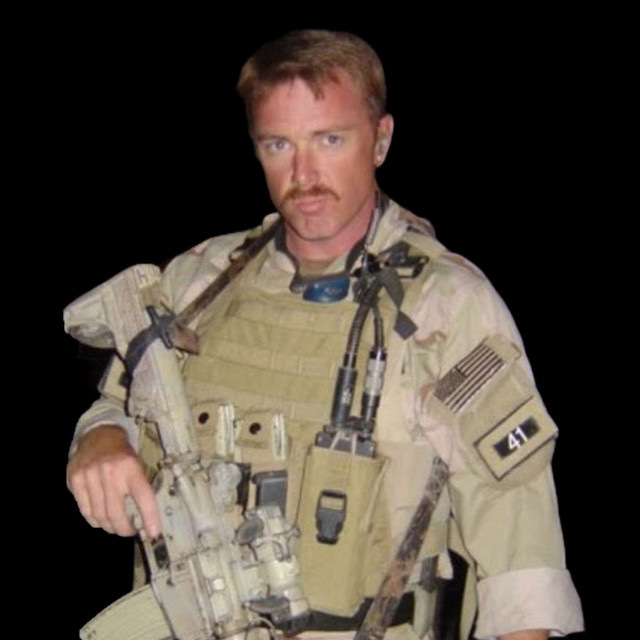
It is an honor to hear about John Dailey’s experiences and lessons learned. John, thanks for sharing your wisdom here on Substack — I love both Walking Point and RTFU — and in Tough Rugged Bastards: A Memoir of a Life in Marine Special Operations. I’m grateful for you answering a few questions for Vale Tudo readers today.
What did you keep and what did you drop from your days on active duty?
I have tried to stop living with a “hurry up and wait” mentality. The Marine Corps owns you in a way civilians can’t really understand. We are big on formations, last-minute tasks that change constantly, and we can be masters of beating dead horses. Since I retired, I try to be in charge of my time and not waste any of it.
I have kept the concept of standards. I still try to do the small things like they matter, because they do. I lay my gear out. I show up early. I keep my kit squared away. I work out whether I feel like it or not. The Marine Corps taught me that we don’t rise to the occasion, we sink to the level of our training and preparation. That is probably the most important thing I learned over my twenty-plus years.
What would you tell your teenage self about preparing for selection and combat?
I’d tell him three things:
Stop chasing “hard for hard’s sake” and build a strong foundation. Young guys want to prove something every day. Selection doesn’t reward the guy who goes hardest once. It rewards durability. Ruck a lot. Learn to move under load without breaking. Build a strong back and hard feet, solid cardio, and get strong in compound movements. Being boringly consistent will build mental ruggedness and resilience.
Be coachable. Everybody thinks selection is about being a savage. It’s not. It’s about whether you can take feedback, stay calm, and keep getting better under pressure while making the team better. Although we still expect you to be a savage when the situation requires it.
Train your mind like a weapon system. If a movie showed the reality of combat, no one would sit through it because it would be boring as shit. It’s long stretches of monotony, interrupted by moments that demand perfect violence and perfect judgment. Learn to regulate yourself through breathing, self-talk, focus. Learn to do the next right thing when you’re scared, exhausted, and unsure. That’s the job.
Did war reveal anything from your childhood or training that you needed when it counted?
Training and combat taught me to be grateful for my upbringing. My parents taught me to work hard for what I wanted and never to quit. I grew up pretty humbly, so a lot of the things I wish I could have changed about our circumstances at the time have wound up being the things that really shaped me. I am incredibly grateful for them now.
Second, I am grateful for the hard leaders who taught me that it’s not enough to rehearse until you get it right. You need to rehearse until you can’t get it wrong. That is what saves your ass in combat, a reliance on standards and the knowledge that the guy on either side of you has been held to the same standard. If your preparation is adequate, mission success is assured long before the fight ever happens.
Who makes the best Marines? Who makes the best Raiders?
For the Marines in general, the best candidates aren’t always the toughest kids. I wasn’t. They’re the ones looking for a standard and willing to be shaped by it. People who want to earn something and are willing to sacrifice their wants for the organization and unit to get it. People who want to belong to something demanding and bigger than themselves.
To become a Raider is harder. The best candidates tend to have:
A strong understanding of why they want to be a Raider.
Humility and willingness to learn from anyone.
Composure, they can’t fall apart when it’s chaotic.
Relentlessness, they always go a little further.
Selflessness, they make the team better.
Trust, they can trust and be trusted.
Are those traits innate?
Some people are born with a head start. But I’ve watched plenty of natural athletes quit because their character was weak, or because they couldn’t stand the thought of not being first at everything they do. And I’ve watched average guys become operators because they were disciplined, coachable, and stubborn in the right ways. You can cultivate it if you’re willing to do the little things consistently.
What’s your current mission?
My mission now is to take the lessons I’ve learned over the past almost forty years, 21 years on active duty and 18 years helping make Raiders, and translate them into a framework anyone with the will can use to get better at getting better.
My mission has two branches. The education arm is Walking Point. It is based on the idea that you’re responsible for your own azimuth. If you don’t choose your mission, you’ll end up executing someone else’s. The training arm is RTFU, Ruck The Fuck Up. Because life is hard, and we need to be harder. It focuses on using rucking to build durability and mental toughness.
What’s your favorite and least favorite exercise?
Favorite: Rucking. It comes as close as possible to being a full-body workout, and it is infinitely scalable by adjusting how far, fast, heavy, or high you go.
Least favorite: Lunges. I do them. I hate them. My knees have taken quite a bit of damage over the years, so for me, they are the exercise version of getting kicked in the balls.
What was the worst thing you ate in the military?
The worst thing I ever ate was absolutely Balut on a dare. It is a street food in the Philippines. It is a steamed, fertilized, developing egg embryo eaten out of the shell. I just threw up a little in my mouth thinking about it. The only saving grace is that I was really drunk.
What do you eat now?
Now I try to treat food as fuel 85-90% of the time. I meal prep once per week and am fine with eating the same thing repeatedly. I try to stick to real food, high protein. I eat a lot of eggs, meat, Greek yogurt, rice/potatoes, and fruit. I’ve also started modifying my eating plan based on the workout I’m doing. I do fasted cardio, but fuel before gym sessions. The other 10-15% of the time I eat whatever I want. I don’t want to be the guy who shows up at your party with his own food in a container.
Any supplements you take or recommend?
The big one is creatine. I think there is enough research to show that everyone should be taking at least 5 grams per day.
Beyond that, I take protein powder if I won’t get enough from food during the day. Vitamin D and omega-3s. I also think many people would benefit from taking magnesium at night to improve sleep quality.
I get bloodwork done a few times a year and change what I’m taking based on that. Not medical advice, just what’s worked for me and what tends to be useful.
What does your inner scoreboard measure?
My daily scoreboard has three questions:
Did I do what I said I would do?
Did I get better?
Did I help anyone become more capable?
If I can hit all three in a day, I feel pretty good about myself.
What metrics matter the most to you today?
On paper, I track habits: training consistency/volume, strength trends, sleep, and recovery numbers like resting HR/HRV.
I also track output. Words written, tasks completed, etc. I’m a big ‘to do’ list guy. Not because numbers are everything, but because data doesn’t lie. I believe that we spend our time on the things that are most important to us. If the things I am tracking and the way I’m spending my time don’t align, it’s time to have a meeting with myself and figure out why.
What’s the best way to be ready to attack the next evolution?
Recovery has always been a weak spot for me. I tend to push to the brink of breaking. But now that I’m getting a bit older, I’ve had to re-evaluate.
In the gym, I don’t schedule deload weeks at rigid intervals. I pay attention to sleep, resting heart rate, and heart rate variability. When those numbers start trending the wrong way, it’s a good indicator that I need to back off.
For running and rucking, I dial back roughly 10% on distance or intensity one week per month. Life also forces breaks on me due to travel or work, which I’ve learned to treat as strategic instead of frustrating.
And I’ve finally gotten serious about scheduling mobility sessions separate from normal workouts—and using sauna, massage, and sports therapy not just to recover, but to increase capability.
If you could get every reader to take on one hard challenge this year, what would it be?
I wish I could get everyone to undertake at least one hard challenge this year. But I wouldn’t dictate what it has to be.
It should be something that both scares and excites you. Something that tests you physically and mentally. Something you’re not 100% sure you can complete. And something that, if you do complete, finds you more confident and capable on the backside.
I’m a fan of rucking challenges and solo multi-day backpacking trips. They don’t just test your fitness; they provide a platform for you to test yourself.
John, thanks for your time. I am 100% committed to more rucking and less Balut. More importantly, thank you for your service to America. Thank you for reviving one of the deadliest units of warfighters in our country’s history. Marine Raiders have been bad news for our enemies for generations.
Readers, want to learn more? Order a copy of Tough Rugged Bastards. I did and I loved it. I’m currently following it up with The Raider: The Untold Story of a Renegade Marine and the Birth of U.S. Special Forces in World War II which tells the story of John’s military lineage.
When he described the best Marine Raiders, was he talking about you? They need the right people to become Raiders and Raider officers. Not everyone can do it. Not everyone will try. But everyone should prepare — run, swim, and especially ruck. They have an excellent program. They only take the best, but everyone can use their doctrine to become better.
TL; DR -- It isn’t too long; do read. But among the takeaways:
1. Build a strong back and hard feet.
2. Take feedback, stay calm, and keep getting better under pressure.
3. Do the right thing when you’re scared, exhausted, and unsure.
best rucking equipment?