

Primal Hardship
Things that matter with Sam Alaimo

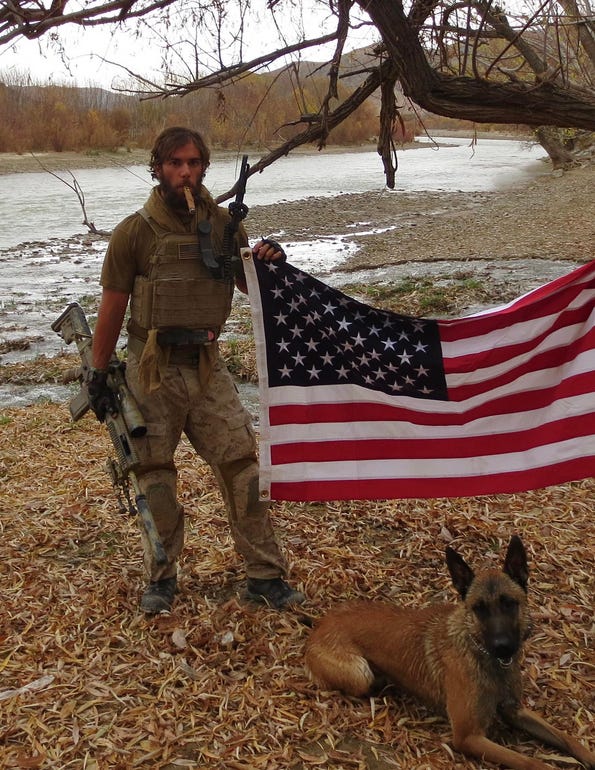
I want you to put me in a situation where if I do not pack my bag correctly, then I will die.
Sam, welcome to Vale Tudo. I love your Substack What then? (from Epictetus’ τί οὖν). Does implementing Stoicism come naturally or is it something you need to train?
I practiced Stoic principles long before I knew Stoicism as a philosophy existed. Once I started studying Epictetus, I realized he codified lessons that everyone prior to the proliferation of stability, safety, and luxury (i.e. detachment from nature) already lived by. This is the brilliance of Epictetus’ system: how to take command of our own lives and not become lost in a world designed to keep us lost. When I was in the military, it took zero effort. It simply made sense, and it kept us awake and alive. Now, it takes an incredible amount of effort to be “awake”. Without constant reminders, a disciplined way of life, I lose myself in thoughts, desires, cravings, aversions—the list goes on. The fight to remain awake is a worthy fight in itself.
Do you have a favorite time and place in history that inspires you?
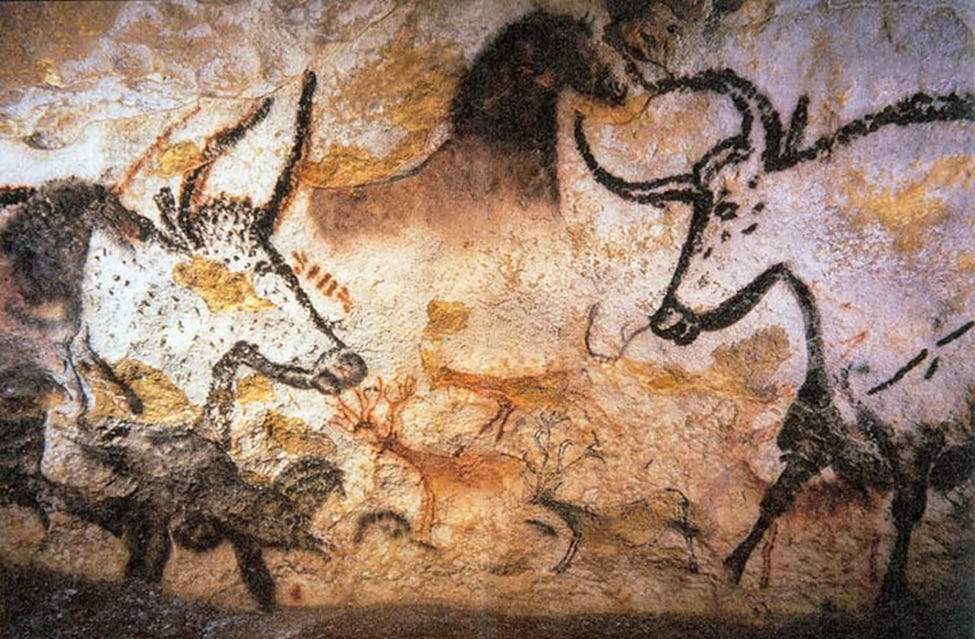
All of them are prior to the point in evolutionary time when the State was created. In Europe, that was with the dominance of the Roman Empire. In parts of Africa, it was not until recently the State was created. Any place and time in which people took part in muscular labor and the hunt, lived in tight knit communities and practiced ancient rituals draws me in. None of these culture were perfect—not by a long shot—but they were fundamentally human in ways it is difficult to imagine for anyone who has not spent time with the few pre-state bands that still exist in rainforests or deserts, or with small groups in the State that are somewhat analogous. If I had to pick one time and place, it might be with a group so early we have only one record of their existence: those who painted the cave walls of Lascaux some 20,000 years ago.
What is your favorite dog breed?
My favorite breed is the Shih Tzu, hands down. Its toughness is inversely proportional to its size—the Shih Tzu is tiny but it is a bare knuckle fighter. My family had Shih Tzus for most of my life. One of them, Gertie, still has a hold on my heart even though she passed in 2015. We had her during some of my deployments. I would rotate between a war zone and seeing Gertie, between evil and unimaginable purity, and the worst war got the more I saw the purity and loyalty of soul those little monsters possess. It is true of all dogs, including my current mutt (Carson) of unknown origin, who is so good looking I get stopped on foot trails to be told how handsome he is.
What is something that you know now that you didn’t before your time in the Navy?
When it comes to preparing for selection, I cannot overemphasize visualization enough. I visualized so intensely that by the time I set foot on the sands of Coronado, I had already made it through Hell Week a hundred times. In my mind, I had already done log PT, surf torture, obstacle courses, cold swims, sleepless nights. I made it so hard in my mind that when I did it in reality I found myself thinking “This is it?” Those who went into BUD/S convinced they were tough, strong, and unbreakable—they quit in the first few days.
What are you most grateful for that you got out of your time serving?
It is hard to whittle the list down. The two things that stand out most to me are the men and the mission. It was harder getting out of the military than getting in as a result of the loss of these two factors. Training and combat with a small special mission unit felt ancestral—a small and incredibly tight knit unit with one hyper focused life-or-death mission. I never felt anything before or after that can compare. I am not alone in this feeling, so my brothers and I decided to found a company together so we could work together on the one hand, and have a noble mission on the other. We founded ZeroEyes and have a mission to end mass shootings in America.
The Navy takes the most fun things in the world – jumping, diving, and shooting – and makes them suck. Have you stuck with them?
You nailed it. How they can take diving, skydiving, and shooting, and make them so brutally miserable you swear you will never do them again is actually extraordinary. I’ve stuck with none of them, but for a different reason. Many guys when they transition out try to recreate the thrill by base jumping, or cave diving, or some other extreme sport. But I found that because they are similar but a fraction of the intensity, they never live up to the real thing. So I went the radically opposite direction and found intense engagement in personal studies, reading, writing, and thinking. Paradoxically, this has given me the greatest “thrill” since my time in the Teams.
What is one exercise that you love? Hate?
I love hill sprints. I swear by hill sprints: pure hill sprints, hill sprints coupled with kettlebell swings, maybe on stairs, maybe on a muddy slope or concrete road or crushed rock. I finish almost every workout with them.
I feel great hostility towards burpees and I refuse to do them. It is a crucial skill getting off and on the ground, this is true, but the burpee is a joyless and wretched movement that should not exist.
What do you eat?
I eat an extremely limited diet as a result of autoimmune issues I developed during a deployment overseas. I eat meat and fruit, so there is nothing too strange. One of the foods I can eat is 100% cacao. I have seen some people gag and have to spit it out due to its bitterness, but most people can stomach it and I’ve developed a passion for pure cacao, its various geographic origins, and its subtle flavors.
What metrics matter to you?
It is a perceptive question. I have stripped almost all metrics from my life because I found I was focusing more on the metrics than on the thing being measured. Check out Epictetus 3.26 for an excellent insight on this.
Remember that you are an actor in a play, of such a kind as the author chooses; if short, then in a short one; if long, in a long one. If he wishes you to act the part of a beggar, of a cripple, of a ruler, or of a private person, see that you act it well. For this is your business, to act your role well. That is enough.
- Epictetus 3.26
The only metrics I have right now are time based. One of them is a set number of hours per day for reading and writing. Everything else is allowed to ebb and flow as the day evolves. The mission is to focus more on the process of each moment than on an eventual outcome since the process is within our control while the outcome is not.
How do you recover?
I love recovery now as much as I despised it when I was younger. I use the barrel sauna almost every day, walk at least five miles per day, use short breathing exercises at intervals throughout the day, and have tried to maximize my sleep-to-bed ratio (restrict sleep until my body adapts to the sleep schedule I want. For example, if the goal is 7 hours of sleep per night, it is ideal to sleep 6.5-7 hours out of the 7 hours spent actually lying in bed. If you sleep 6 hours but spend 9 hours in bed, the ratio is out of whack.)
What’s the best fitness advice you’ve ever received?
There is no such thing as over training, only under recovery.
Do you have a mentor?
My mom is the best mentor I have ever had. All my other mentors were thinkers who left us their wisdom in books, and most are not alive. Eric Hoffer, Epictetus, Ernst Junger, the list goes on—all of these men have influenced the course of my life in profound ways. Even fictional characters, like Gandalf the Grey, have shaped me since I first read LOTR when I was fourteen and have read it every year of my life since then.
Sam, thank you. You are welcome back on Vale Tudo anytime, brother. Looking forward to reading your next What then?
A thoughtful interview. I’ve followed Sam for a while, so this won’t be new to him, but it resonated with what I’ve seen in practice.
People who’ve experienced significant hardship (whether structured, as in training or military service, or unstructured, as in poverty or instability) don’t tend to seek comfort so much as structure and responsibility. Sam mentions not tracking metrics, which some might read as a lack of structure, but I think there’s an important distinction between rhythm and rigid scheduling. One can commit to “I do this every day” without fixing it to a specific time or place.
I run a very small strength gym, and the people who do best are rarely those who’ve had lifelong comfort. More often it’s the shift worker with two kids who outlasts the single desk worker. Hardship didn’t make them noble, but it taught them to respond rather than withdraw.
They also tend to seek a sense of community and common purpose; something people encounter, to varying degrees, in the military.
I’m curious whether you and Sam see the modern problem as primarily a lack of hardship, or a lack of structures that make hardship containable and meaningful.
“the burpee is a joyless and wretched movement that should not exist.” YES! Thank you Sam. I love you for saying that. Are you listening @KyleShepard?
There are some wonderful insights in this post. I particularly like the one on over training versus under recovery. Sam is a virtual cornucopia of information from a vast variety of fields. When I grow up, which unfortunately will be never, I want to be like Sam.